
01
Google your community.
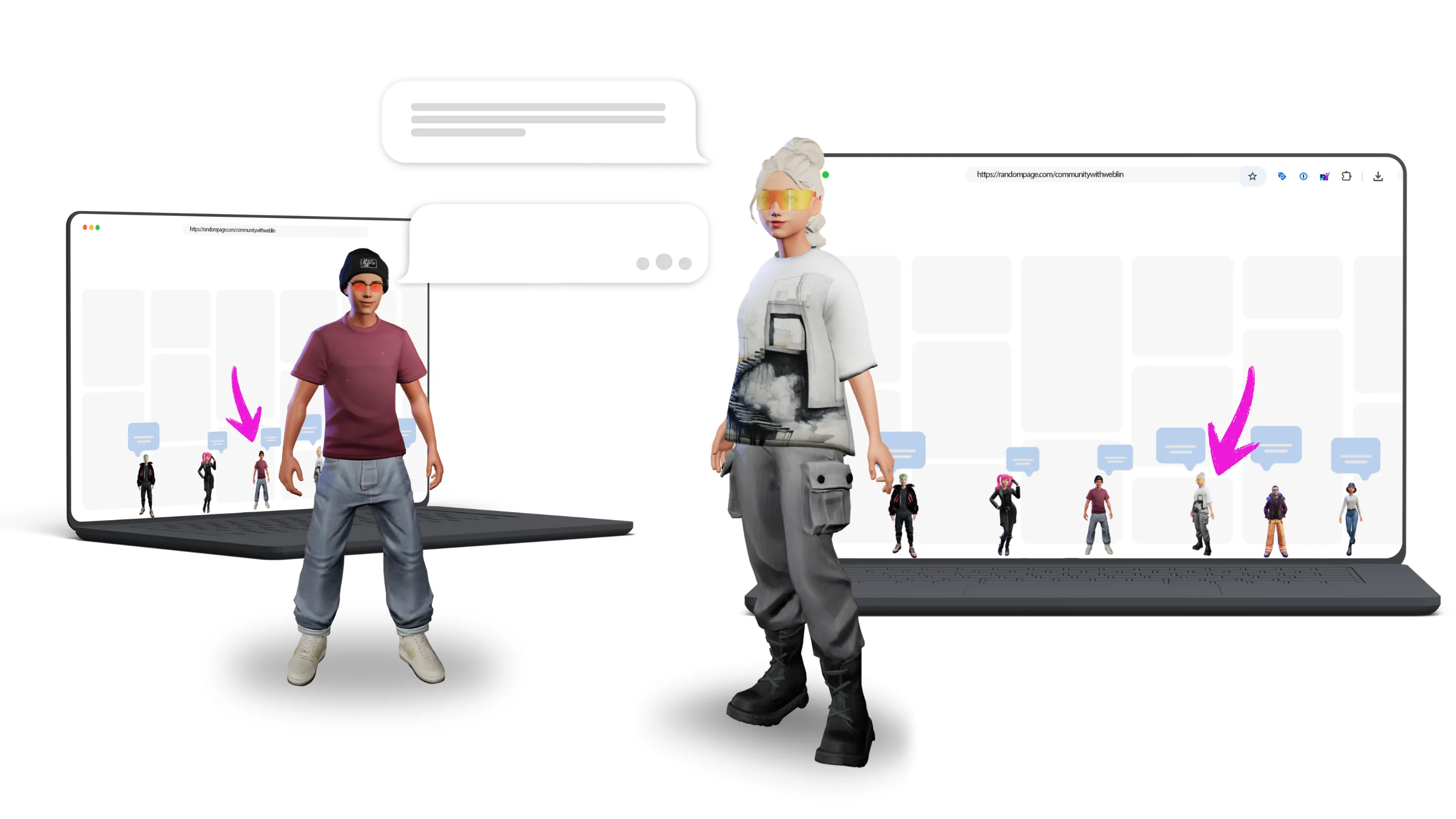
Google links every topic to a page. Each page has a community based on a shared interest.
Weblin is a social network that turns any website into a place where people connect. Search Google for a page on a topic that interests you, and connect with people who share your interest.
Google links every topic to a page. Each page has a community based on a shared interest.
weblin turns this page into an interactive space for the existing community. Like a Facebook group linked to this URL.
You can join this interactive space via our app or our browser extension. You can chat, post a Thought that others can comment on, or start a video conference.


We want to create a space for those who want to connect, crave community, seek meaningful conversations and want to share ideas. And to be honest, it’s just fun to meet new people on your favorite site.
Social media isn’t social anymore. It’s passive consumption. Endless feeds, zero connection, floods of unreal AI content. The result: Statistics show that more than half of young people feel lonely and are seeking belonging and real connection.
It’s so easy when a group shares common interests. Just as in the real world, many small groups are a natural phenomenon, as they reflect the diversity of our interests. We feel a sense of belonging, participate actively and connect more quickly.

Imagine walking through the world, but there’s no one around. Billions of people use the web every day. But there’s no one around. weblin brings people back. Encounters happen, just like in real life. For us, the web is the largest metaverse. But without any barriers to entry, such as 3D glasses, powerful computers, complex Discord servers, etc.

The room is full of people who share the same interest as you.
weblin is live. We have a browser extension with many features and an app prototype.
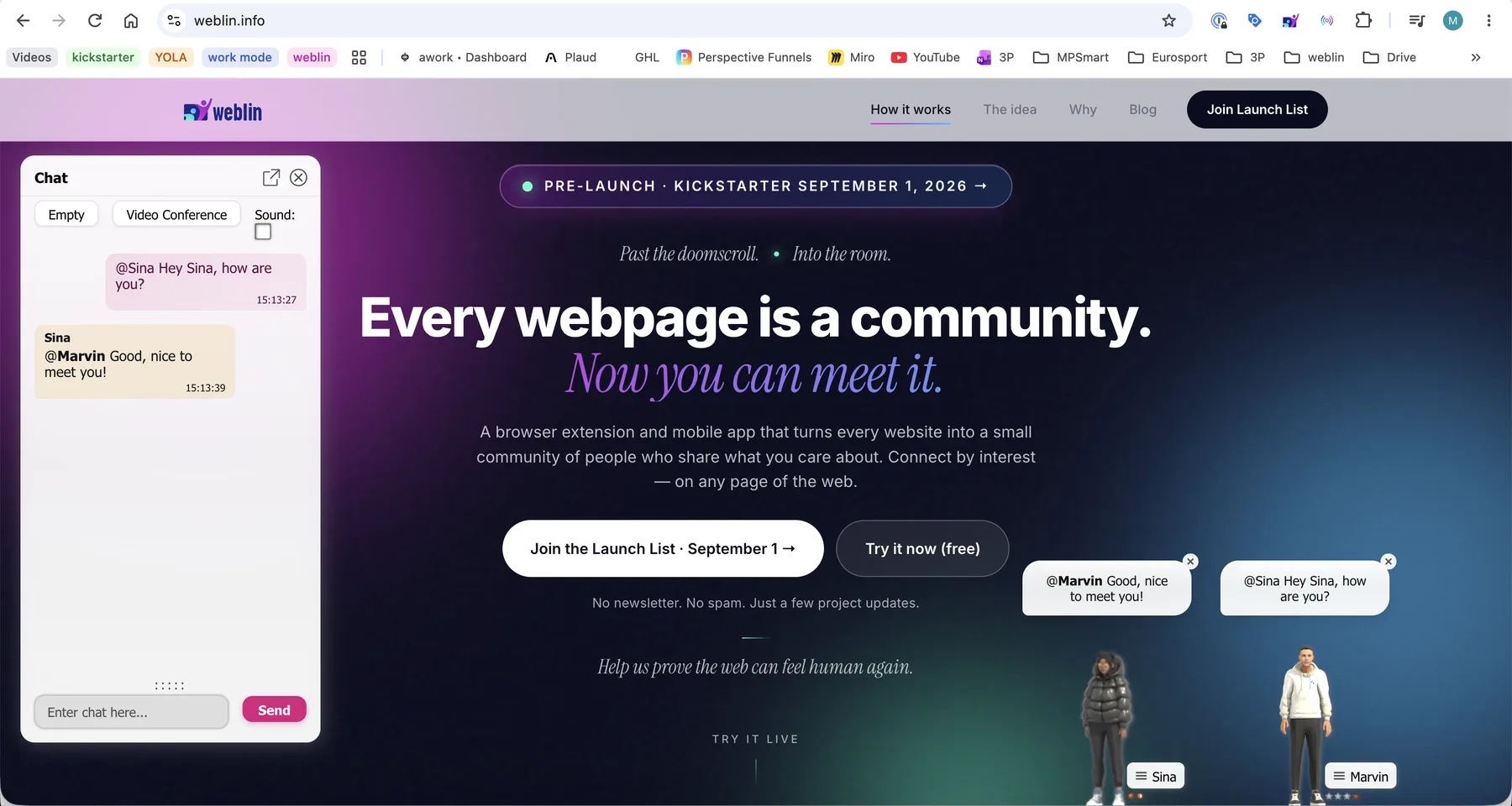
With this browser extension, you’ll appear as an avatar on every website and meet other people. Chat with everyone or send DMs.
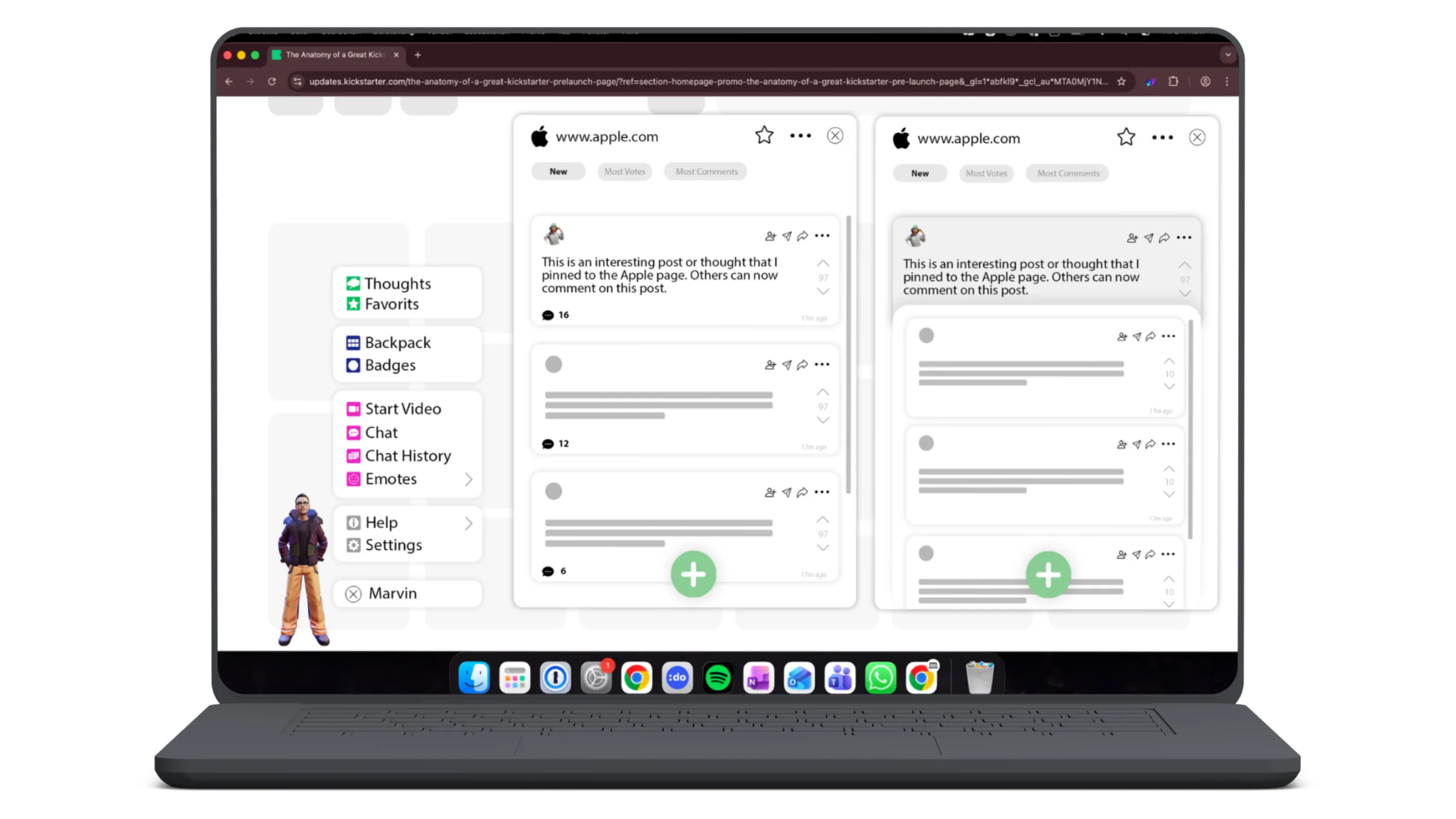
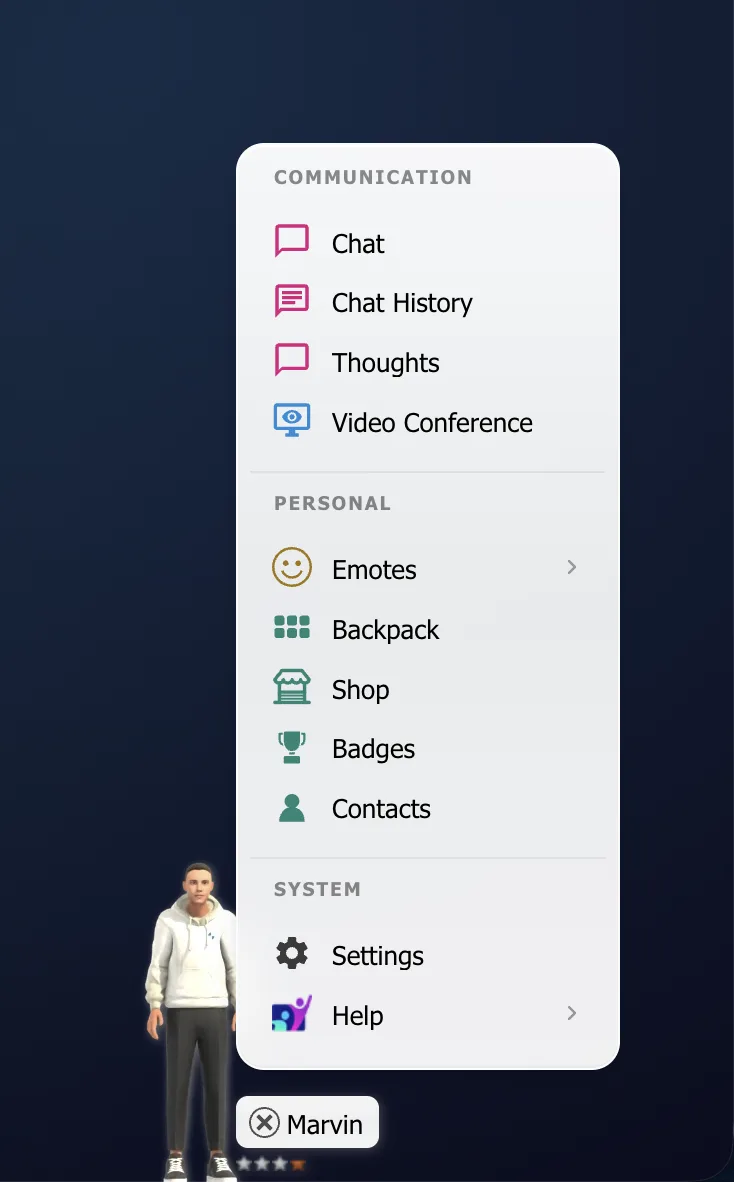
You can access chats, stickers, Thoughts, contacts and your backpack via the menu next to your avatar.
Write a chat message, view the site’s chat history, open the Thoughts world or open the site’s video conference room.
Dance, cheer, laugh with your avatar or share another emote. In the Backpack, you can access all items, avatars, effects and games. In the Shop, you can buy items with points. Badges let you pin bookmarks or visible badges to your avatar. Have you met people who might become friends? In ‘Contacts’, you can manage all the contacts and friends you’ve made over time.
Change your name, your avatar, or transfer your profile to another computer. Do you have any feedback or need help? Simply click on ‘Help’.
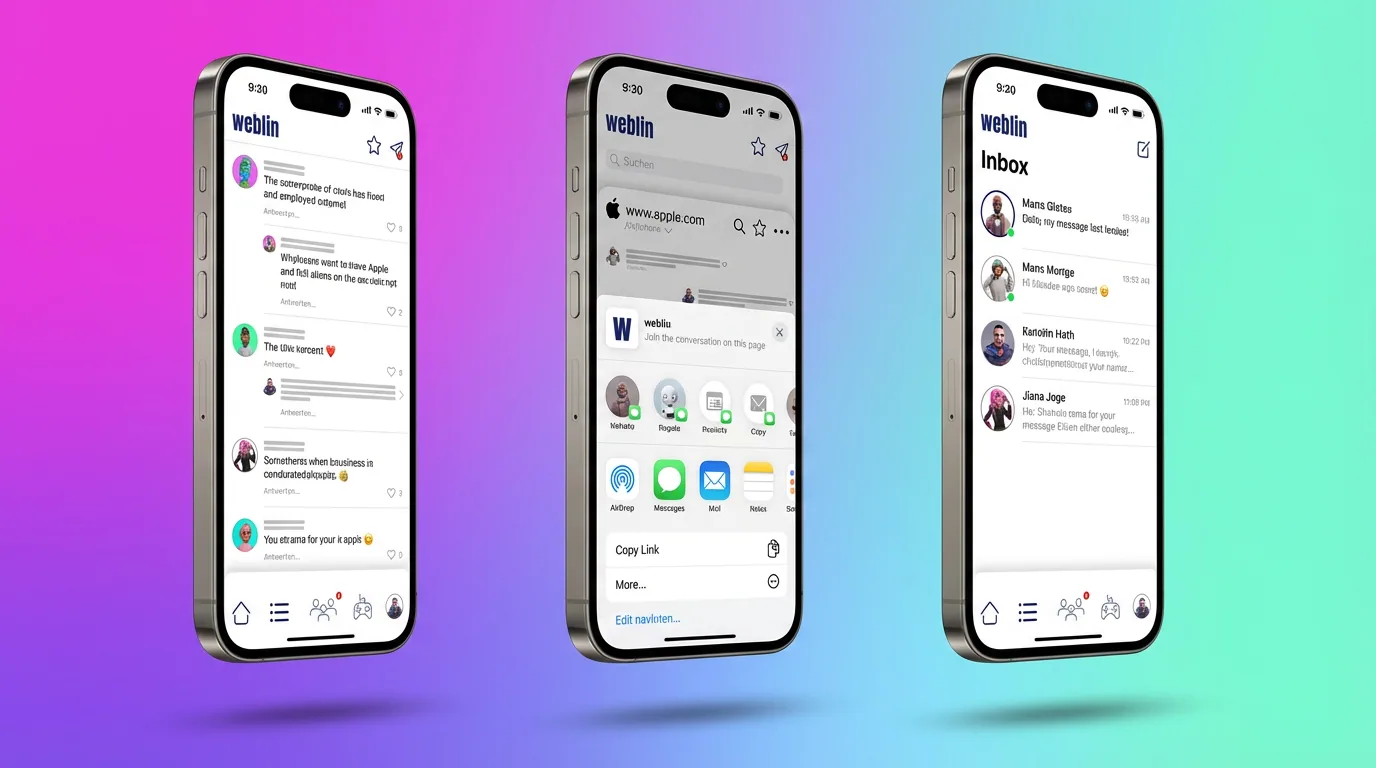
Access the websites on the go. Browse through Thoughts, jump from Google straight into the page chat rooms, and chat with your new friends.


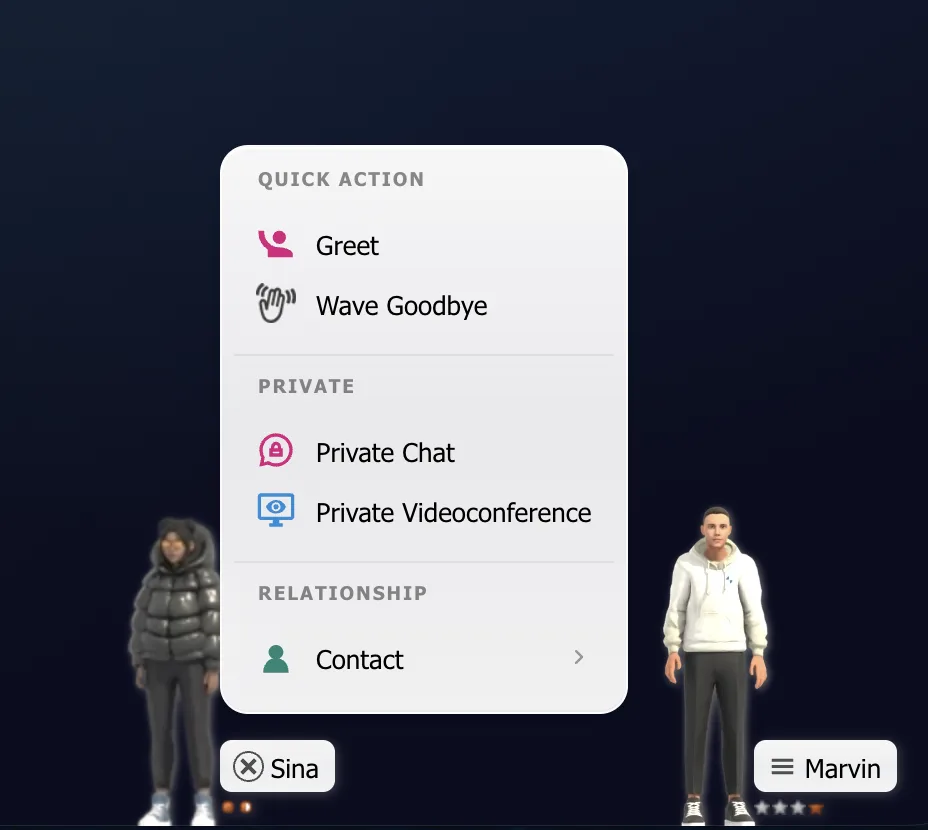
Say hello or goodbye. Would you like to chat privately? Send a private message or start a private video call. You can also save the person as a contact or send a friend request.
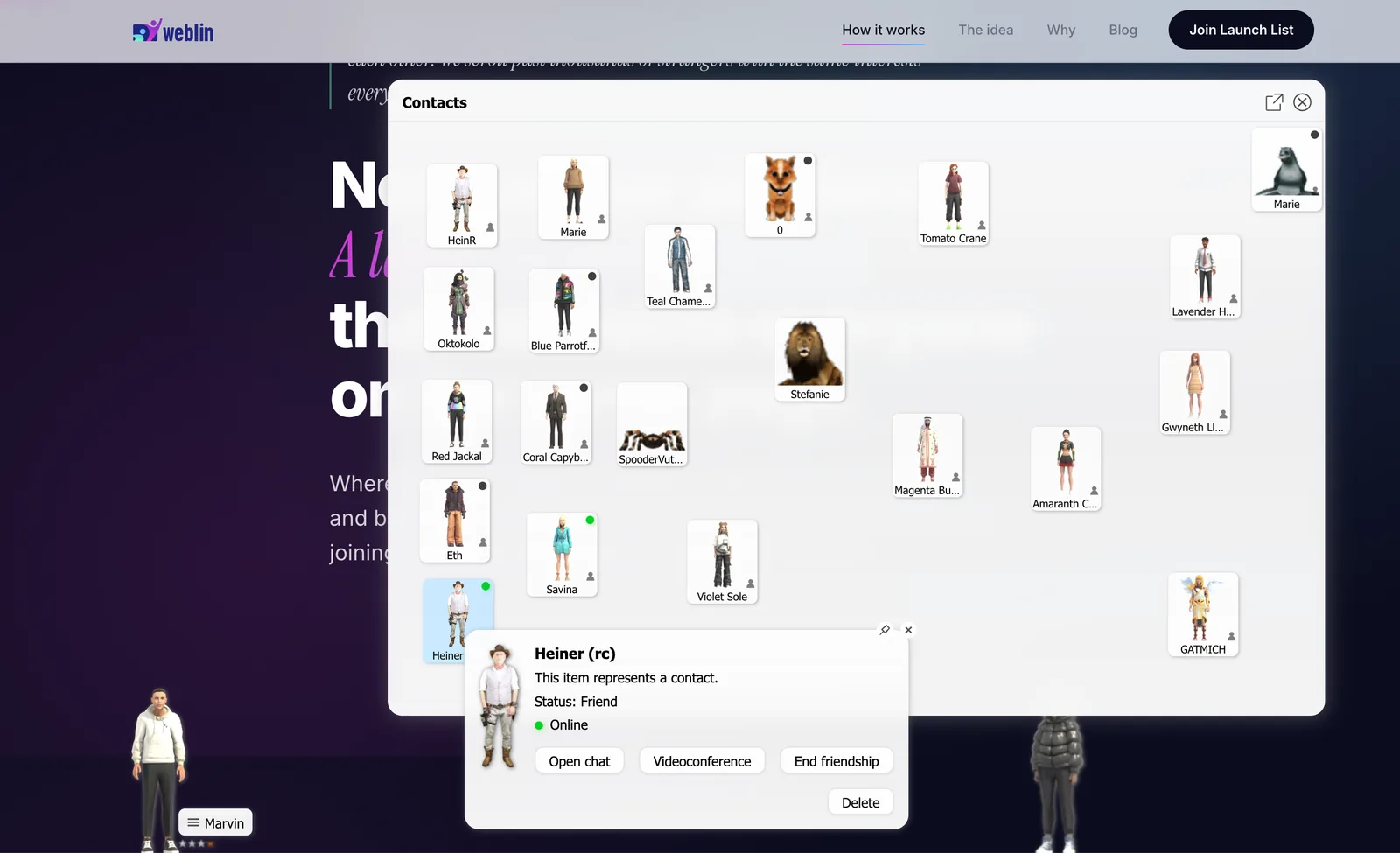
Have you had any casual chats or an interesting conversation? Send a friend request. If the person accepts, you’ll be able to see if they’re online and send them private messages, regardless of whether you’re on the same site.
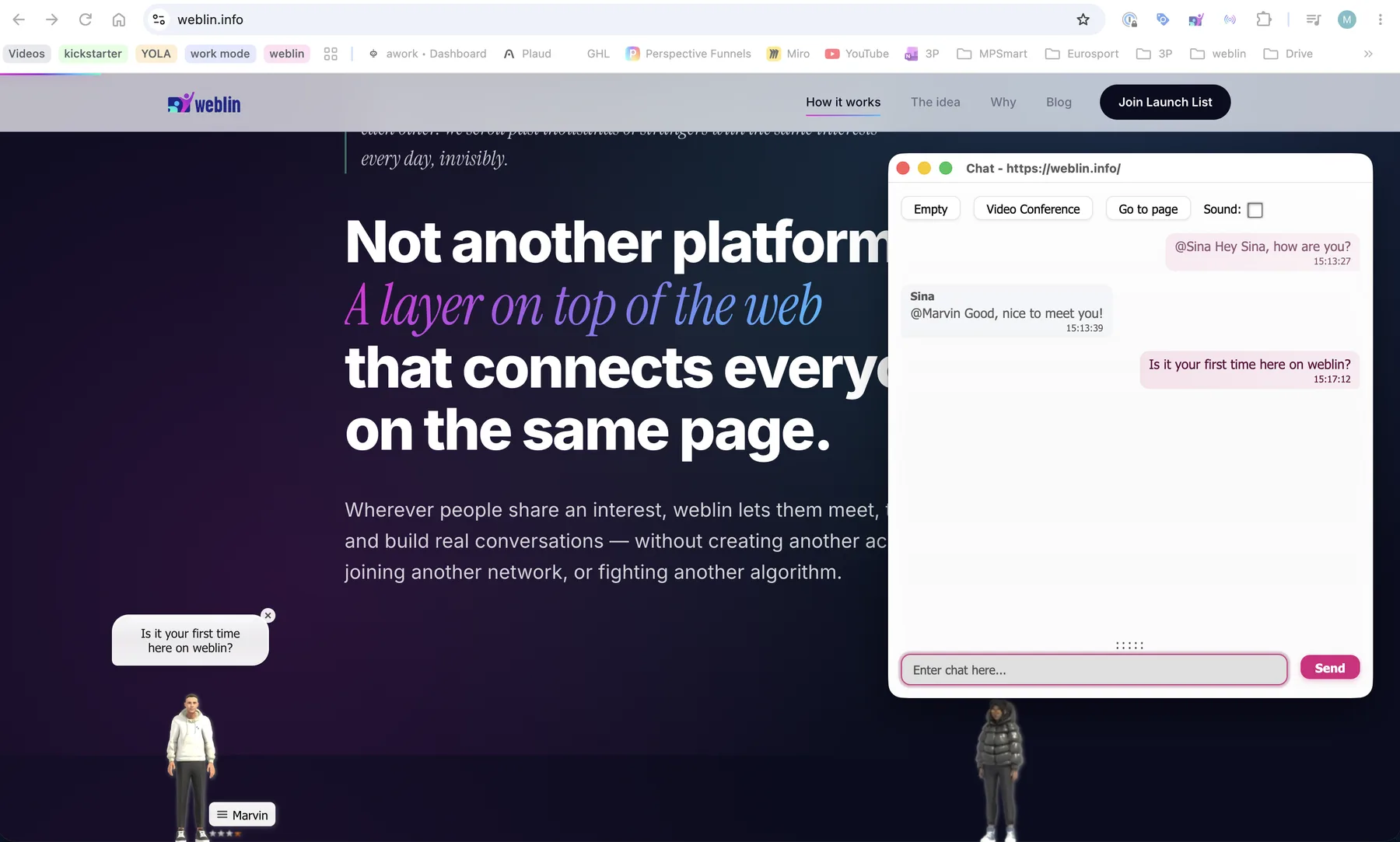
To ensure you can take part in a private chat or conversation, even if you frequently switch between tabs whilst browsing, you can run weblin features such as private chats, page chats, video conferences, etc. in separate browser windows.
We want to create a vast world of micro-communities with genuine connections. For those who want more than just a community in the comments section under a Reel.
One-to-many is becoming few-to-few.
Sliding into people’s DMs, trawling through the comments sections of Reels, in the odd Discord channel or old forums and Facebook groups. But actually: not really.
Meet people on websites that interest you. Strike up a conversation on the spur of the moment. Discover things you have in common. Add them as friends. Just like at a real-life event. However niche it may be.
99% passive media consumption. 1% creators whose ultimate goal is to reach a wide audience. Content: Brainrot videos & AI-generated content.
weblin is no replacement for social media. We enable small communities, genuine interaction and a feed of thoughts from your favourite sites – without algorithms, adverts or AI-generated content.
Search for information on websites, shop, make reservations, watch videos, and open web applications.
Exactly the same. Except that with just one click, every page becomes a lively space. weblin adds a social dimension to the existing web.
The community for your anime / cosplay event / TV show / band / game is scattered across Discord servers, subreddits, and Instagram accounts. You first have to search for them, join them, and read the rules.
The fan site itself is the clubroom. No server, no sign-up, no onboarding — just show up. Anyone who’s there is part of it.
We’ll send you a heads-up when the campaign goes live, plus 3 to 5 project notes between now and then. That’s it.
Sending you a confirmation email…
✓ Thank you. Please confirm via the email we just sent you.
Something went wrong. Please try again or email team@lupuslabs.de.
No newsletter. No spam. Just a few project updates — and one final email when Kickstarter goes live. Unsubscribe in one click, anytime.
Already convinced? Install the extension now — it’s free.
The early web had places — forums that felt like local pubs. Then platforms replaced rooms with feeds. The argument for weblin in one essay.
Read the featured essay →An AI talks to a million people simultaneously, with the same attention you get. Co-presence works differently — and the difference isn't quality, it's structure.
Read →Ray Oldenburg called them third places: anchors of social life beyond home and work. The web has feeds. Feeds aren't third places.
Read →